
Why Are So Many People Turning to Reiki? - by Kerry Powell, Reiki Master Teacher
Have you noticed that Reiki seems to be everywhere at the moment?

Reiki Healing Room at Chi-quilibrium
I have definitely seen an increase in posts on socials, people contacting me to learn, and when I am working at events, a common conversation is that the person has had Reiki in the past.
Perhaps you too have heard a friend mention having a series of Reiki healings to help with a particularly stressful few months. Maybe you've seen Reiki social media, or heard someone say, "I had Reiki yesterday, and I feel so much lighter." Has this made you curious to know more? You’re not alone as I’ve seen an uptake on bookings where more and more people are turning to Reiki as part of their wellbeing journey. Some come because life feels overwhelming. Others are navigating grief, burnout, menopause, anxiety, or significant life changes. Some simply feel disconnected from themselves and long for a moment of peace in an increasingly busy world. For other it may be to manage or ease physical pain like fibro and arthritis, headaches and migraines.
While everyone's reason is unique, most people arrive at Chi-quilibrium with something in common…they're looking for space to pause, breathe, and reconnect.
Reiki isn't about escaping life. It's about creating a quiet moment within it.
So, what exactly is Reiki?
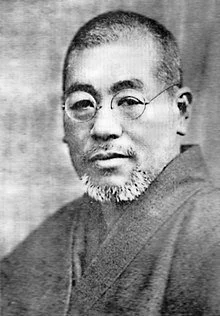
Dr Mikao Usui
Reiki is a gentle, complementary therapy. Reiki as we recognise it, was introduced to us by Dr Mikao Usui in Japan in the early twentieth century. The word itself combines two Japanese words:
Rei – often interpreted as universal or spiritual wisdom.
Ki – meaning life energy, the energy believed to flow through all living things.
During a Reiki session, the practitioner places their hands lightly on or just above different areas of the body in a series of comfortable positions - these often align, but are not limited to, the seven main chakras of the body. The intention is to encourage deep relaxation and support your body's natural ability to restore balance. Unlike massage, there is no manipulation of muscles, and unlike counselling, there is no expectation that you need to talk through your problems. The Reiki practitioner is acting as a conduit between universal life force energy and you. And here’s the important announcement I always make to new clients - “It’s actually you that is doing the healing, I’m simply facilitating”!
During each session you have permission to rest without needing to do anything - this, to me is the gift of Reiki and is invaluable in itself. I absolutely love it when a client falls asleep or drifts off into that in-between state. That’s your body at ease.
So, why are more people choosing Reiki today?
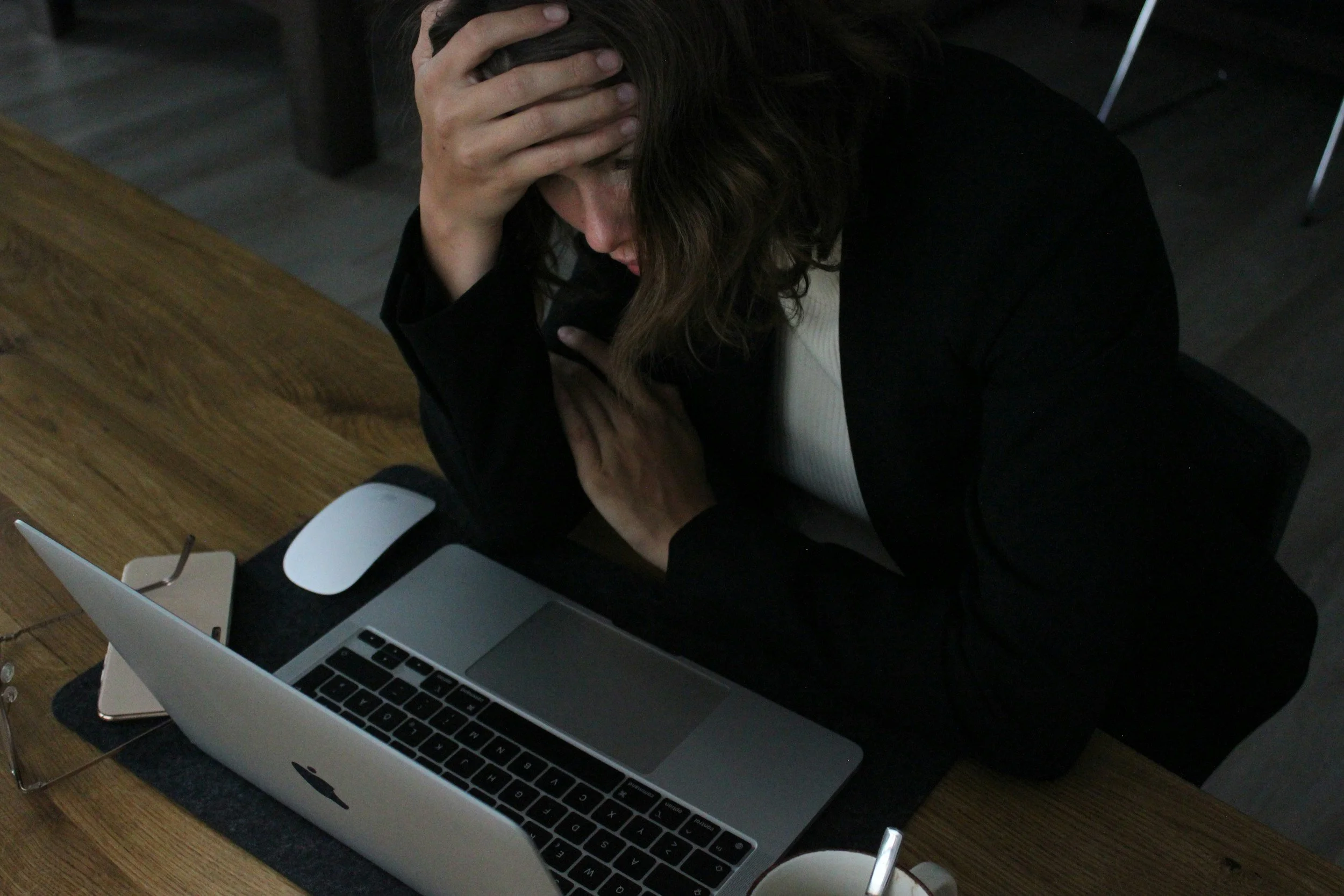
Work / life stresses
· Modern life rarely gives us permission to stop.
· We're constantly connected, always available, juggling responsibilities at work, caring for others, managing households, responding to messages, and trying to fit everything into an already full day.
· Even our moments of rest often involve scrolling through our phones.
It's hardly surprising that so many people describe themselves as feeling exhausted, emotionally drained or as though they're constantly running on empty.
Reiki offers something refreshingly simple.
For around an hour, nothing is expected of you.
You don't have to achieve anything.
You don't have to perform.
You don't have to explain yourself.
You simply allow yourself to rest.
For many people, that alone feels profoundly nourishing.
It's not just about stress
Although stress is one of the most common reasons people book a Reiki session, it certainly isn't the only one.
People often seek Reiki during times of:
Emotional overwhelm
Burnout
Major life transitions
Bereavement
Menopause
Sleep difficulties
Feeling disconnected from themselves
Personal growth or spiritual exploration
Recovery after particularly demanding periods of life
Reiki is not intended to replace medical treatment or professional healthcare. Instead, many people choose it as a complementary practice alongside conventional care to support relaxation and overall wellbeing.
What does a Reiki session actually feel like?
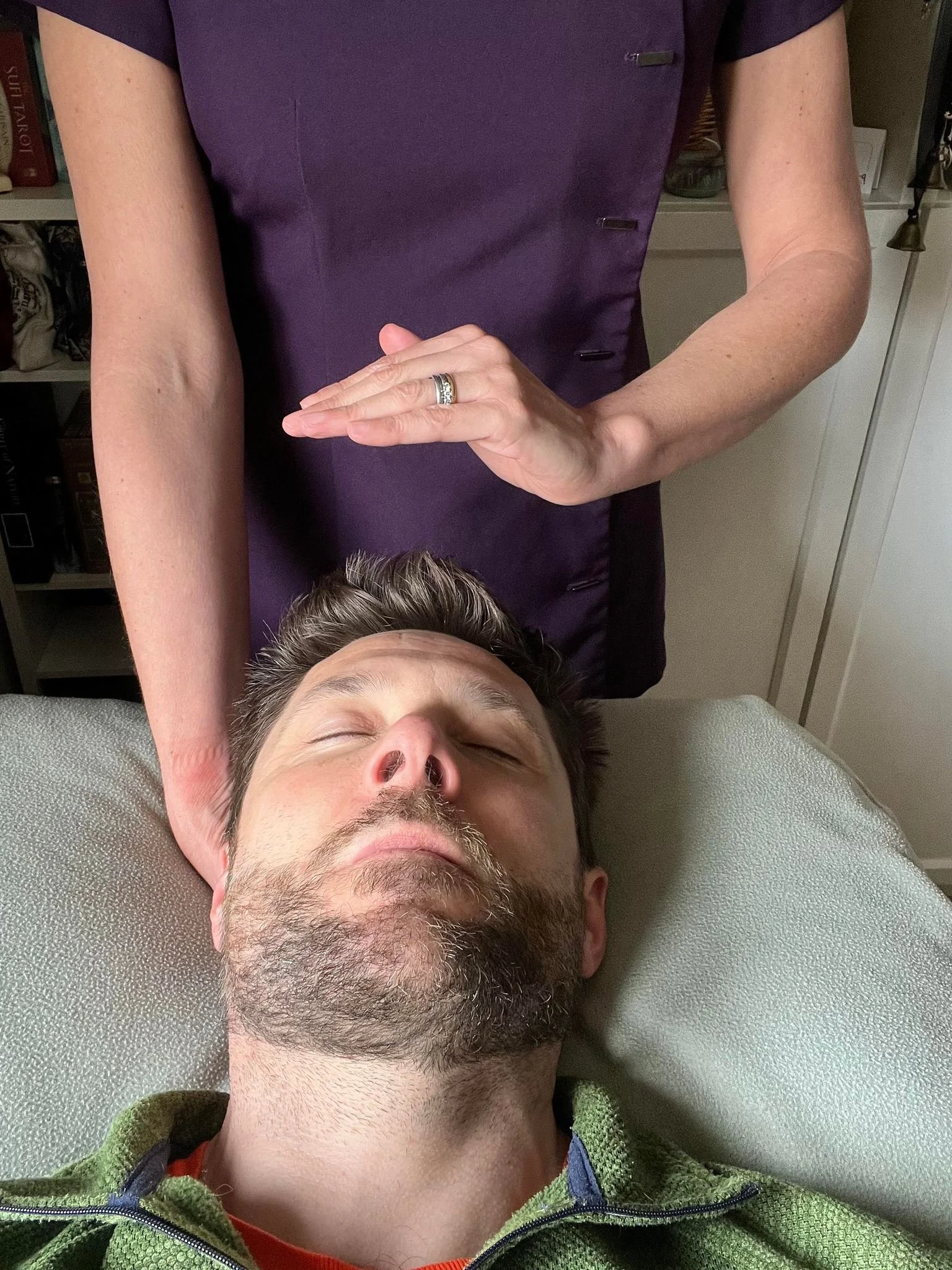
The start of a Reiki session
This is probably one of the questions I'm asked most often. The honest answer is that every person’s experience is different and each session for that person can also differ.
· Some people notice warmth flowing through different parts of their body.
· Others experience tingling sensations, gentle waves of energy or a feeling of heaviness as their body deeply relaxes.
· Some people drift into a peaceful sleep.
· Others remain fully awake but describe feeling incredibly calm and seeing colours.
· Occasionally, people feel very little during the session itself but notice afterwards that they are sleeping better, feeling more emotionally balanced, or responding differently to situations that would previously have caused stress.
There is no "right" way to experience Reiki.
Every person is different.
Every session is different.
Do you have to believe in Reiki?
One of the biggest misconceptions is that you need to follow a particular religion or hold certain spiritual beliefs. You don't.
People from every background choose Reiki and, in some cases, because they're deeply spiritual. I genuinely have devout Christian clients and clients who simply enjoy complementary therapies.
Reiki doesn't ask you to believe anything. It simply invites you to experience it for yourself.
Why do people come back?
Many people book an initial Reiki session because they're feeling overwhelmed or are wanting a complimentary healing modality to their mainstream medical care.
What often surprises them is how different they feel afterwards. Like literally as soon as they get off my Reiki bed or chair, they somehow feel lighter, with a sense of calm.
Often sleep becomes better, inner strength steps up or they may feel more like their old self again. Don’t get me wrong, life doesn't suddenly become perfect and there are still those demands with work and home life and every day responsibilities BUT Reiki may help you feel better equipped to meet challenges with clarity and a renewed feeling of steadiness.
That is often why Reiki becomes part of their ongoing wellbeing routine rather than something they try only once. Returning Reiki sessions vary from monthly to 6-8 weeks, everyone is different. I do have several clients who will arrive stating the session is in the nick of time or are happy to push their next visit out a week. I’m flexible and you should be too. I’m not going to tell you that you have to come every 2 weeks, that unethical, but I do encourage you to listen to your body and make a plan moving forward.
Reiki isn't about fixing you
One of the things I value most about Reiki is that it doesn't begin with the assumption that you're broken.
Life affects all of us. There are seasons when we feel strong, energised and full of purpose. There are also seasons when we feel tired, overwhelmed, uncertain, or emotionally stretched. Seeking support during those times isn't a sign of weakness, it's an act of self-care.
Reiki creates space to simply be and sometimes that's exactly what we need.
Sometimes the greatest gift isn't a dramatic experience, it's remembering what it feels like to be still.
In a world that constantly encourages us to do more, achieve more and be more, choosing to pause can be surprisingly powerful.
Is Reiki right for everyone?
Reiki is wonderfully gentle, and many people enjoy incorporating it into their overall wellbeing routine.
Whether you're navigating a particularly busy period, feeling emotionally overwhelmed, experiencing a significant life transition, or simply looking for an opportunity to relax, Reiki may offer a calming and restorative experience.
If you have a medical condition, are pregnant, or have any concerns about your health, it's always sensible to continue following the advice of your healthcare professionals. Reiki is designed to complement not replace appropriate medical care.
Common Questions
Do I need to prepare for a Reiki session?
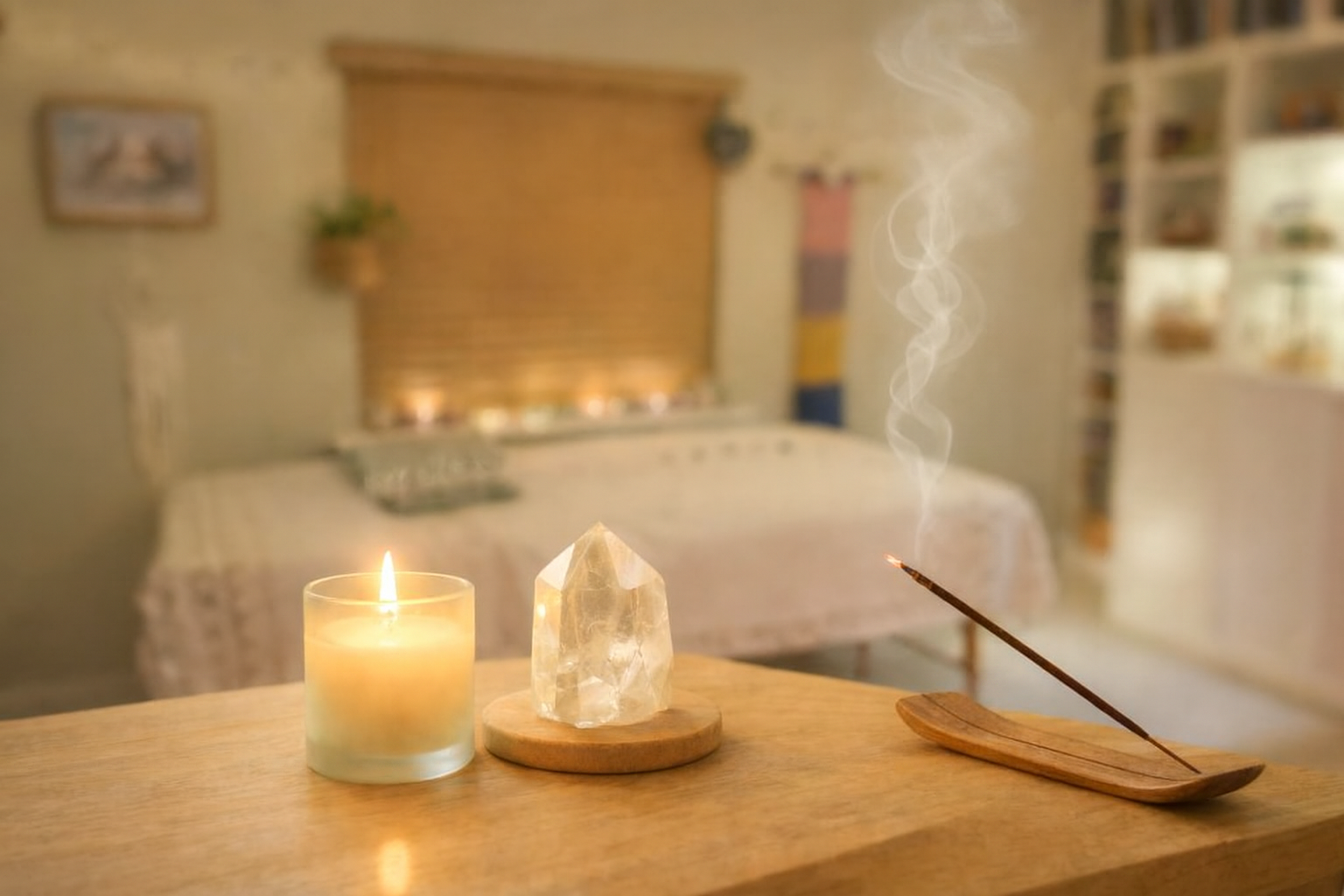
Reiki Room
No special preparation is needed. Simply wear comfortable clothing and arrive with an open mind.
Will I need to remove any clothing?
No. Reiki is received fully clothed while you relax comfortably on a treatment couch.
Can Reiki replace medical treatment?
No. Reiki is a complementary therapy and should not be used as a replacement for professional medical advice, diagnosis, or treatment.
How many sessions should I have?
This varies from person to person. Some people enjoy occasional sessions when life feels particularly busy, while others choose regular appointments as part of their ongoing wellbeing routine.
Is Reiki suitable if I've never experienced it before?
Absolutely. Many of my clients come to Reiki for the very first time with little or no previous knowledge.
A Thought from Kerry
Over the years, I've come to realise that people rarely book a Reiki session because everything is going wonderfully. More often, they're carrying something invisible. Stress that has quietly built over months.
Grief that hasn't yet found its place. Exhaustion from always being the one looking after everyone else.
Or perhaps just the feeling that somewhere along the way they've lost touch with themselves. One of the greatest privileges of my work is simply holding space for people to pause.
For an hour, there is nowhere else to be, nothing to achieve, and nothing expected of you. Whether you experience deep relaxation, emotional release, clarity, or simply enjoy a peaceful hour away from the demands of daily life, every session is your own. I believe we all deserve moments like that.
Pause for a Moment
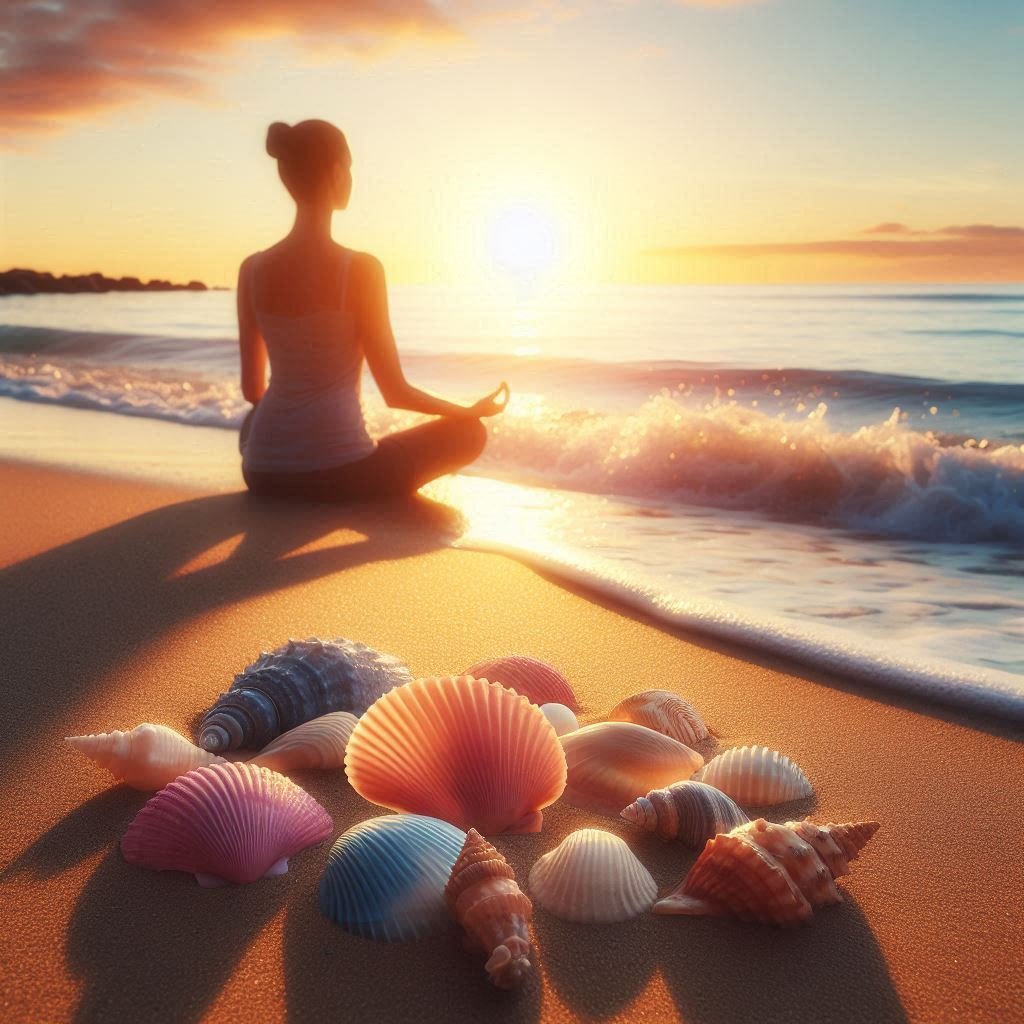
Before you continue with your day, take sixty seconds just for yourself.
Notice your breathing without trying to change it.
Close your eyes and allow your eyes to soften behind your eyelids.
Unclench your jaw and relax your neck and shoulders.
Take one slow, comfortable breath in...and gently breathe out.
Open your eyes and look around the room and notice something beautiful like a plant, the light through a window, the steam rising from your cup of tea, or simply the quiet that exists between one breath and the next.
Sometimes, wellbeing begins with the smallest of pauses.
Taking the Next Step
If reading this has sparked your curiosity, perhaps that's enough for today.
There is no need to understand everything about Reiki before trying it. If you'd like to discover what Reiki feels like for yourself, I'd be delighted to welcome you to my peaceful treatment room at Chi-quilibrium in Whimple, just outside Exeter. Whether you're completely new to Reiki or returning after some time away, you'll receive a warm welcome, a calm space, and time that is entirely your own.
And if you're not quite ready to book, that's perfectly fine too. Sometimes the first step is simply allowing yourself to become curious.
Kerry x
